Sewage Treatment Plants (STP)
The sewage treatment process involves a series of physical, biological, and chemical steps designed to remove contaminants from domestic, commercial, and industrial wastewater before it is discharged to the environment.
Preliminary Treatment
This stage removes large solids and debris using:- Screens – to capture rags, plastics, and other coarse materials.
- Grit chambers – to settle sand, gravel, and heavy inorganic particles.
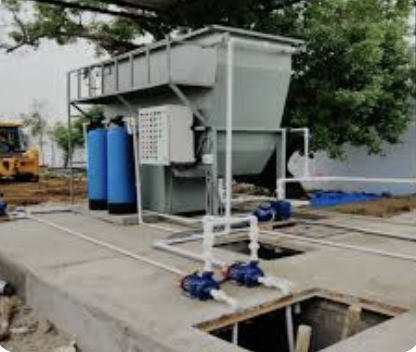
Primary Treatment
Wastewater flows into primary sedimentation tanks, where suspended solids settle at the bottom as sludge, and oils and grease rise to the surface for removal. This reduces the organic load entering the next stage.Secondary (Biological) Treatment
Microorganisms break down dissolved and suspended organic matter. Common biological methods include:- Activated Sludge Process
- Aeration Tanks
- Trickling Filters
- Sequencing Batch Reactors (SBR)
Tertiary (Advanced) Treatment
Further purification is performed to meet higher discharge or reuse standards. This may include:- Filtration- (sand or membrane filters)
- Nutrient removal (nitrogen and phosphorus reduction)
- Activated carbon treatment
Disinfection
Final disinfection eliminates pathogens. Common methods include:- Chlorination
- Ultraviolet (UV) disinfection
- Ozonation
Sludge Treatment and Disposal
Sludge removed from primary and secondary stages is processed through:- Thickening
- Anaerobic digestion
- Dewatering
